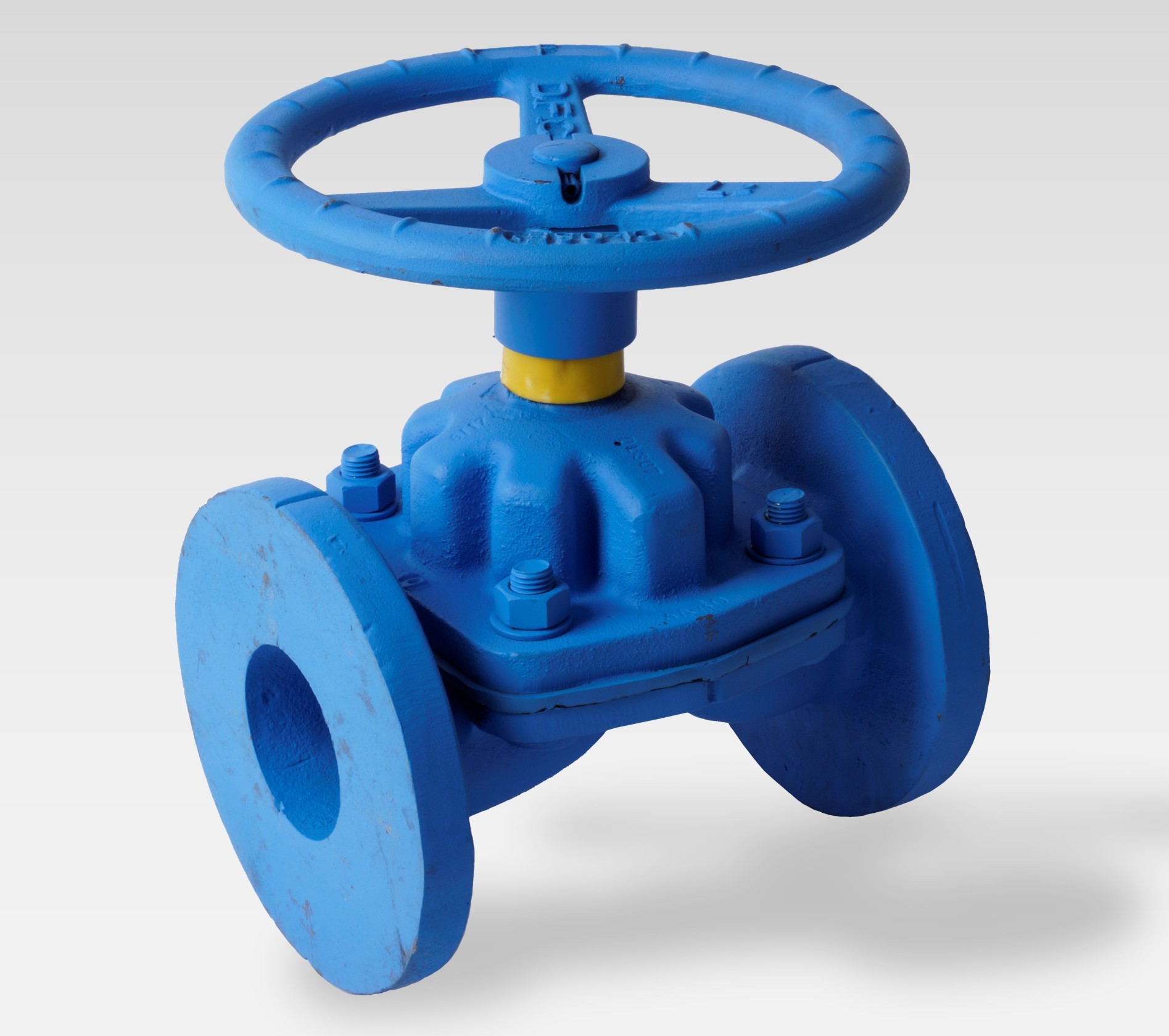
A Diaphragm Valve controls flow by moving a flexible diaphragm into or away from the valve’s internal flow path. Turning the handwheel raises or lowers the diaphragm, allowing the valve to regulate or completely shut off the flow of media.
One of the key advantages of this design is that the diaphragm separates the operating mechanism from the process media, helping protect the valve’s working components and reducing potential leakage paths.
Diaphragm valves are particularly useful in applications involving corrosive, abrasive or contaminated media, provided the body lining and diaphragm materials are correctly selected for the service conditions.
The pictured model features manual handwheel operation and flanged end connections.
Key Features
- Flexible diaphragm sealing design
- Reliable isolation and shut-off
- Process media isolated from operating components
- Reduced potential leakage paths
- Suitable for challenging industrial media
- Manual handwheel operation on the pictured model
- Flanged pipeline connections
- Robust industrial construction
- Suitable for corrosive or abrasive service with appropriate material selection
- Different diaphragm and lining materials may be available to suit specific applications
Typical Applications
- Mining and mineral processing
- Water and wastewater treatment
- Chemical and process industries
- Slurry and abrasive-media applications
- Corrosive fluid handling
- Industrial process plants
- Power generation