A Pneumatic Actuator converts compressed-air pressure into mechanical movement to operate a valve automatically or remotely.
Pneumatic actuators are commonly used with ball, butterfly and other automated valves, eliminating the need for manual valve operation and allowing valves to be integrated into process-control and safety systems.
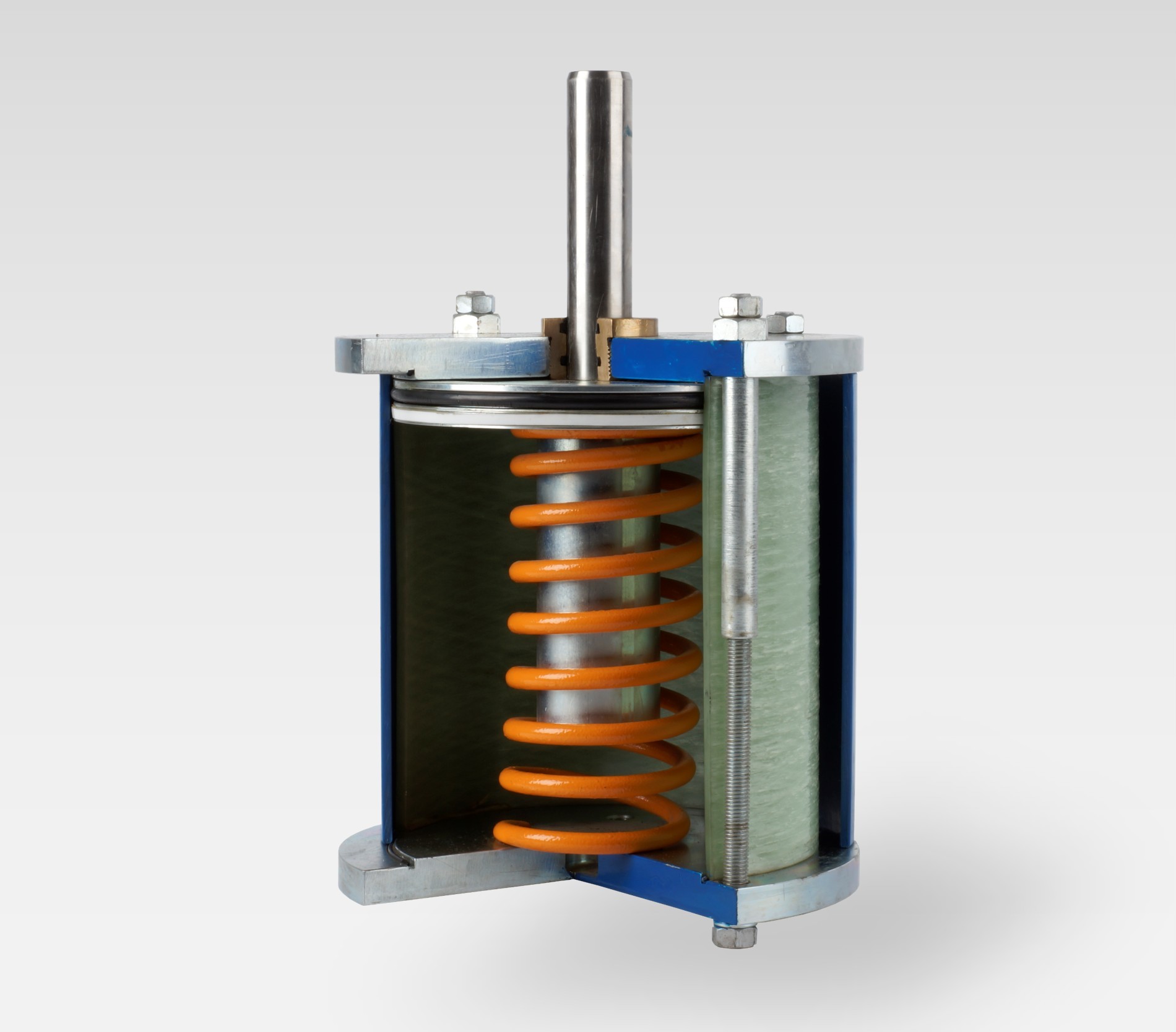
The pictured actuator is a linear spring-return pneumatic actuator. The internal spring provides a mechanical return action when air pressure is removed, allowing the actuator to move towards a predetermined position. Depending on the actuator and valve configuration, spring-return systems can be designed for fail-open or fail-closed operation.
Pneumatic actuation is particularly suited to demanding industrial environments where dependable, repeatable valve operation is required.
Key Features
- Pneumatic valve operation
- Uses compressed air to generate mechanical movement
- Linear actuator design (pictured model)
- Spring-return mechanism (pictured model)
- Suitable for automated and remote valve operation
- Fast and repeatable operation
- Can support fail-safe valve configurations
- Robust industrial construction
- Suitable for integration with solenoid valves
- Can incorporate position feedback and control accessories
- Suitable for process automation systems
- Reduces the need for manual valve operation
Typical Applications
- Automated industrial valves
- Process-control valves
- Mining and mineral processing
- Water and wastewater treatment
- Petrochemical processing
- Power generation
- Manufacturing
- Process industries
- Remote valve installations
- Industrial automation systems